Focus and Scope

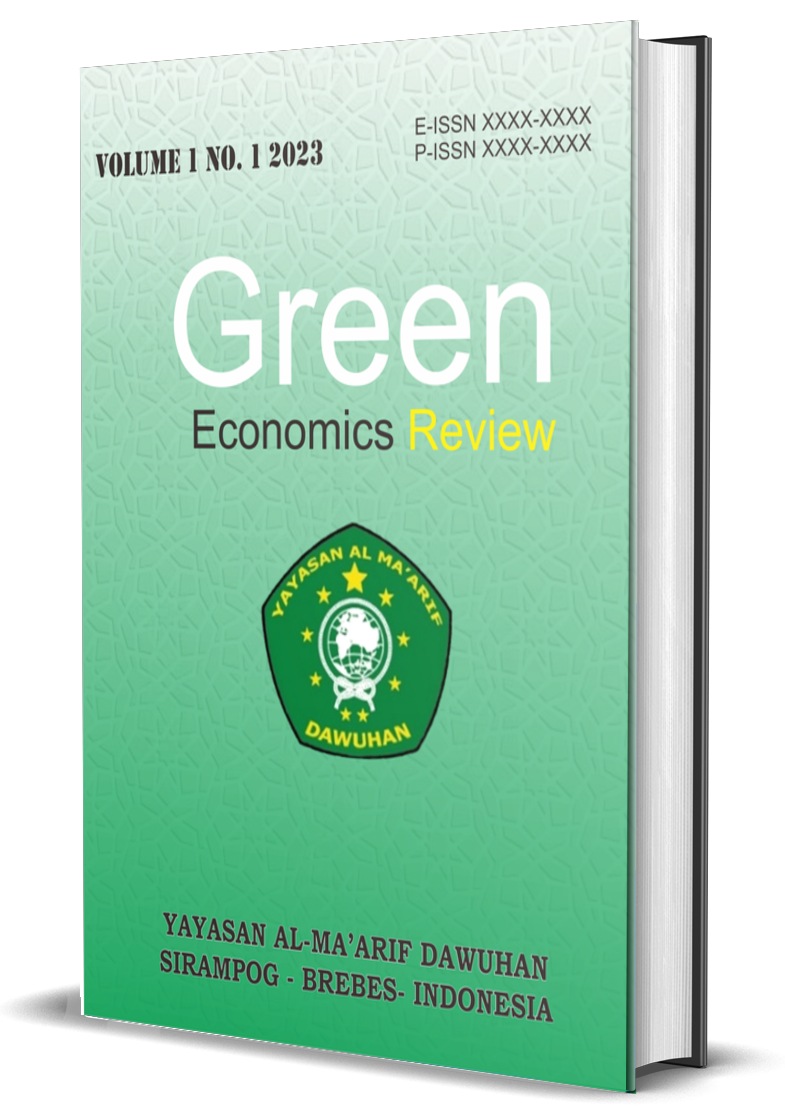
Green Economics Review (GER)

Focus and Scope

Advancing sustainable, inclusive, and environmentally responsible economic thinking through rigorous research, innovative policy analysis, and transformative solutions for people and the planet.

About the Journal

Green Economics Review (GER) is a double-blind peer-reviewed journal dedicated to advancing the theory and practice of Green Economics. The journal provides an academic platform for transformative economic thinking by placing sustainability, social equity, and environmental considerations at the centre of economic analysis and policymaking.

GER welcomes high-quality theoretical, empirical, methodological, and policy-oriented research that explores innovative approaches to addressing global economic, social, and environmental challenges. The journal aims to contribute to the development of economic systems that promote human well-being, social justice, efficient resource use, and environmental sustainability.

Research Focus Areas

GER considers original contributions across the following interconnected areas of Green Economics.

01

Green Economy Theory and Concepts

Research developing, examining, and extending the theoretical, conceptual, philosophical, and ethical foundations of Green Economics and sustainable economic transformation.

  • Development and advancement of Green Economy theories, concepts, and analytical frameworks.
  • Philosophical and ethical perspectives on sustainability in economic thought.
  • Integration of social justice, human well-being, and equity into Green Economy models.
02

Policy Analysis and Recommendations

Research evaluating economic policies, governance arrangements, and policy instruments designed to support sustainable development and address environmental and economic risks.

  • Green economic policies for resource management and societal well-being.
  • Policy instruments for mitigating environmental degradation and economic risks.
  • Comparative analyses of national and international strategies for sustainable economic development.
03

Economic Tools, Instruments, and Metrics

Research on analytical tools, economic instruments, measurement frameworks, and methodological innovations for assessing and improving Green Economy performance.

  • Development and application of Green Economy indicators and performance metrics.
  • Methods for evaluating environmental, economic, and social impacts.
  • Innovative economic instruments for resource allocation, circular economy development, and sustainable production and consumption.
04

Resource Management and Societal Impact

Research examining the economic dimensions of natural resource management and the effects of Green Economy initiatives on communities, livelihoods, and societal well-being.

  • Sustainable and efficient management of natural resources.
  • Economic strategies for balancing environmental protection and societal needs.
  • Local and global impacts of Green Economy initiatives on communities and livelihoods.
05

Global Trends and Their Local Implications

Research exploring global economic and environmental developments and how their implications are interpreted, adapted, and addressed across national, regional, and local contexts.

  • International trends shaping Green Economy transitions.
  • Adaptation of global strategies to local economic, institutional, and social conditions.
  • International cooperation and partnerships for sustainable economic systems.
06

Social Justice and Equity in Green Economics

Research addressing the distributional consequences of economic and environmental transitions, with particular attention to fairness, inclusion, and the participation of marginalized groups.

  • Economic policies and frameworks addressing social and economic inequalities.
  • Strategies for promoting inclusive participation and equitable benefits during the transition to a Green Economy.
  • The role, experiences, and contributions of marginalized communities in sustainable development.

Relevance to the Journal

Manuscripts submitted to GER should demonstrate a clear and substantive contribution to Green Economics. Submissions may employ theoretical, empirical, comparative, qualitative, quantitative, or mixed-methods approaches, provided that the research question and findings are relevant to the journal’s focus and scope.

The journal particularly values work that connects economic analysis with sustainability challenges, offers meaningful insights for policy or practice, and advances understanding of how economic systems can become more environmentally sustainable and socially equitable.

Contributing to a Sustainable Economic Future

Green Economics Review welcomes rigorous and original scholarship that contributes to a more sustainable, inclusive, and environmentally responsible global economy.